Accelerator
Have you ever wondered why you need to prove you are human to non-living algorithms? AI predates the CAPTCHAs many can't solve, as both grow more inaccessible for the humans who are forced to use them.
[FRAMEWORKS]
Critical & Speculative Design
[TIMELINE]
September 2025 – April 2026
[TOOLS]
Unity, VS Code, Blender, Procreate
Final Inquiry
How do AI‑mediated human identity verification systems intensify anxiety and alienation through the transformation of everyday acts of access into compulsory, data‑extractive labour?
FIG.1 "ARE YOU HUMAN??"
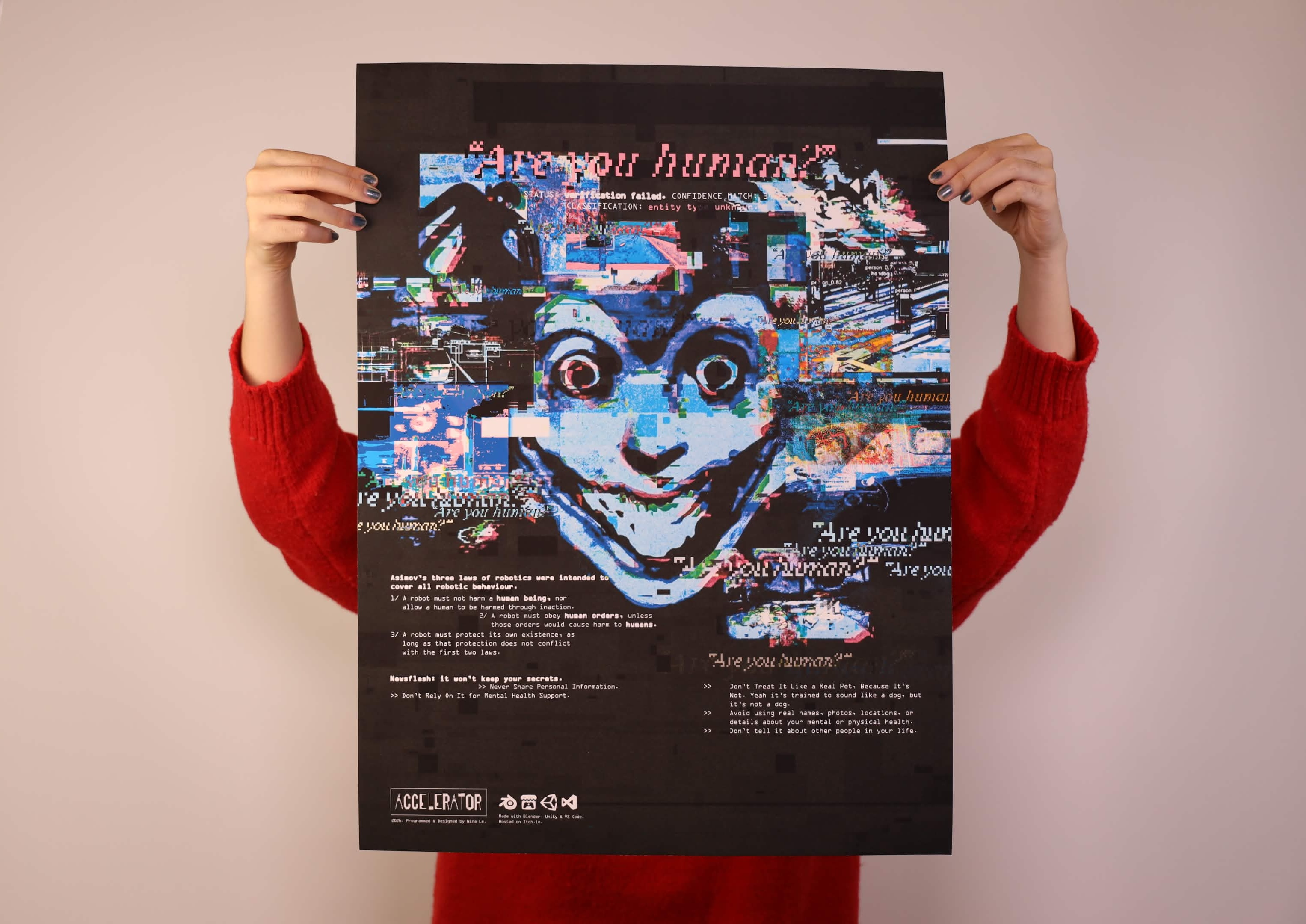
My Capstone Project
PROJECT OVERVIEW
Accelerator is an analog horror game I developed in Unity for my 2026 Capstone project. It is a Critical/Speculative Design intervention focused on the Digital Acceleration Paradox, pondering user agency and democracy in digital spaces. A demo version will soon be available to play on itch.io!
MY RESPONSIBILITIES
Initial Research & Discovery
Learning and Programming in C#
Art Direction
Crafting 2D Sprites and 3D Models
Drawing Cutscenes
Crafting the Game's Narrative and Dialogue
[FIG.2 WALKTHROUGH VIDEO]
[FIG.3 TEXT CAPTCHA]
[FIG.4 IMAGE CAPTCHA - TYPE 1/5]
Background
EXAMINING THE MYTH: BIGGER, BETTER = STRONGER
As a UX/UI designer, it's hard to distance myself from the technologies continuously emerging in the AI space. I'd be lying if I said I wasn't impressed by what AI could accomplish, yet I find myself increasingly unsettled by how aggressively new and improved, "better" technology has been forced into our lives. For instance, do people need AI to summarize their friend's DMs on Instagram? Do they need AI to make backgrounds for our lockscreens, or "art" for their coffee cups? Just because AI can be thrown into every possible use case, should we be advocating for this?
TECHNOLOGICAL DETERMINISM
A communications course I took posed a simple but striking idea: technology is not equal. That statement has only grown louder through my own experience, watching my family members feel consistently excluded by systems marketed as accessible. These personal experiences sit within a wider AI economy celebrated for its promise of efficiency, yet built on the constant extraction of our labour, data, and creativity, often without informed consent. Faster machines, convenience, and more data collection are sold as quick fixes for education, democracy, and law enforcement, despite growing evidence that they deepen inequality rather than solve it.
[FIG.5 FIRST CUTSCENE]
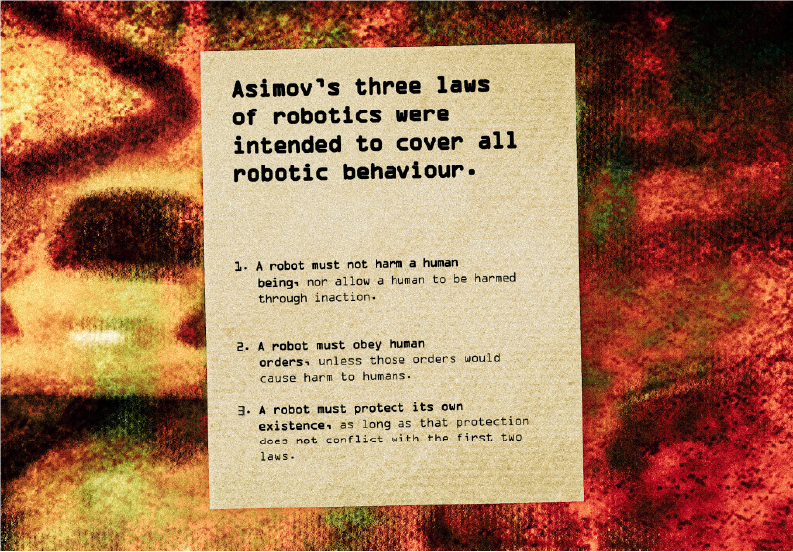
[FIG.6 THE PERFECT COMPANION]
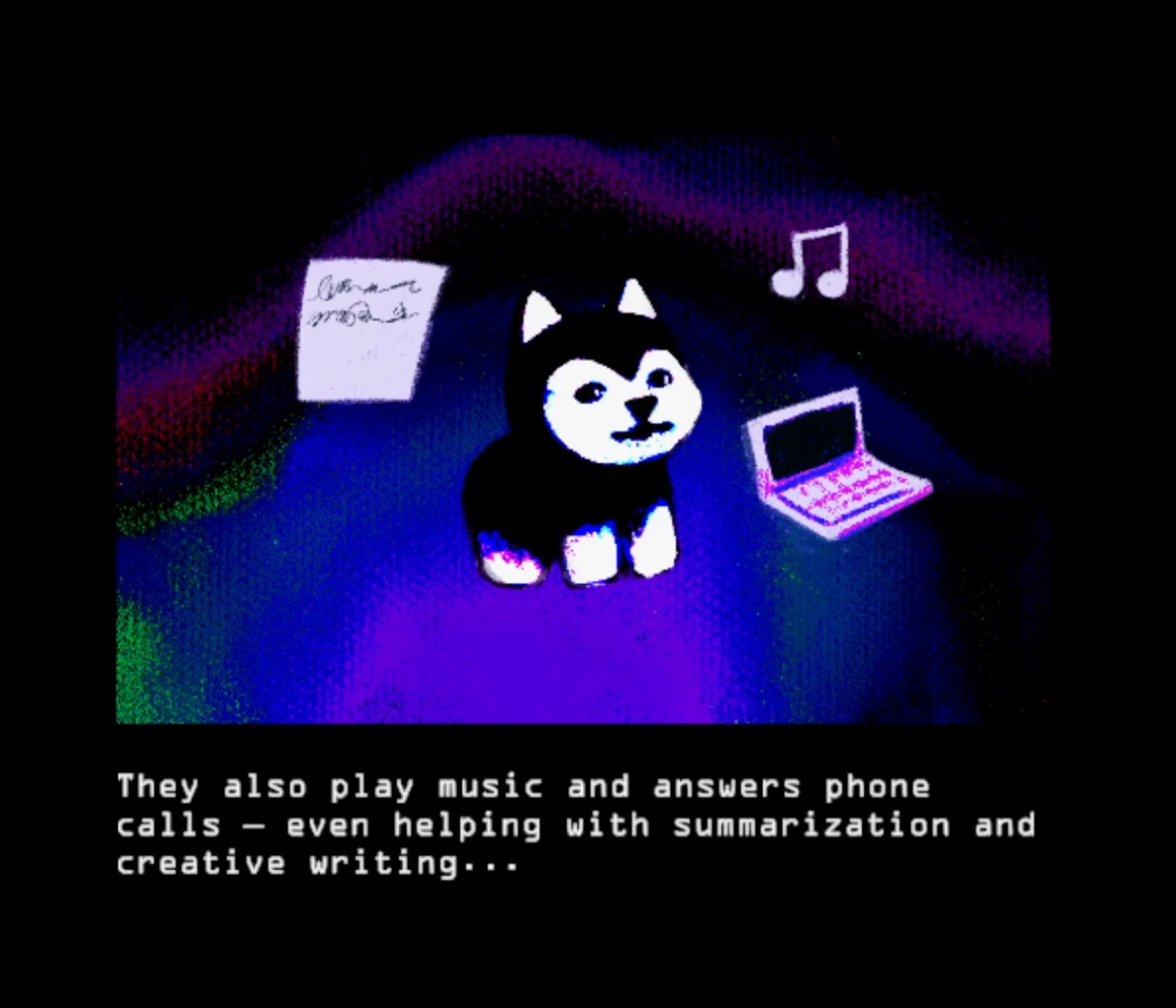
[FIG.7 SO TRUSTWORTHY, ITS TOTALLY NOT SPYING ON YOU]
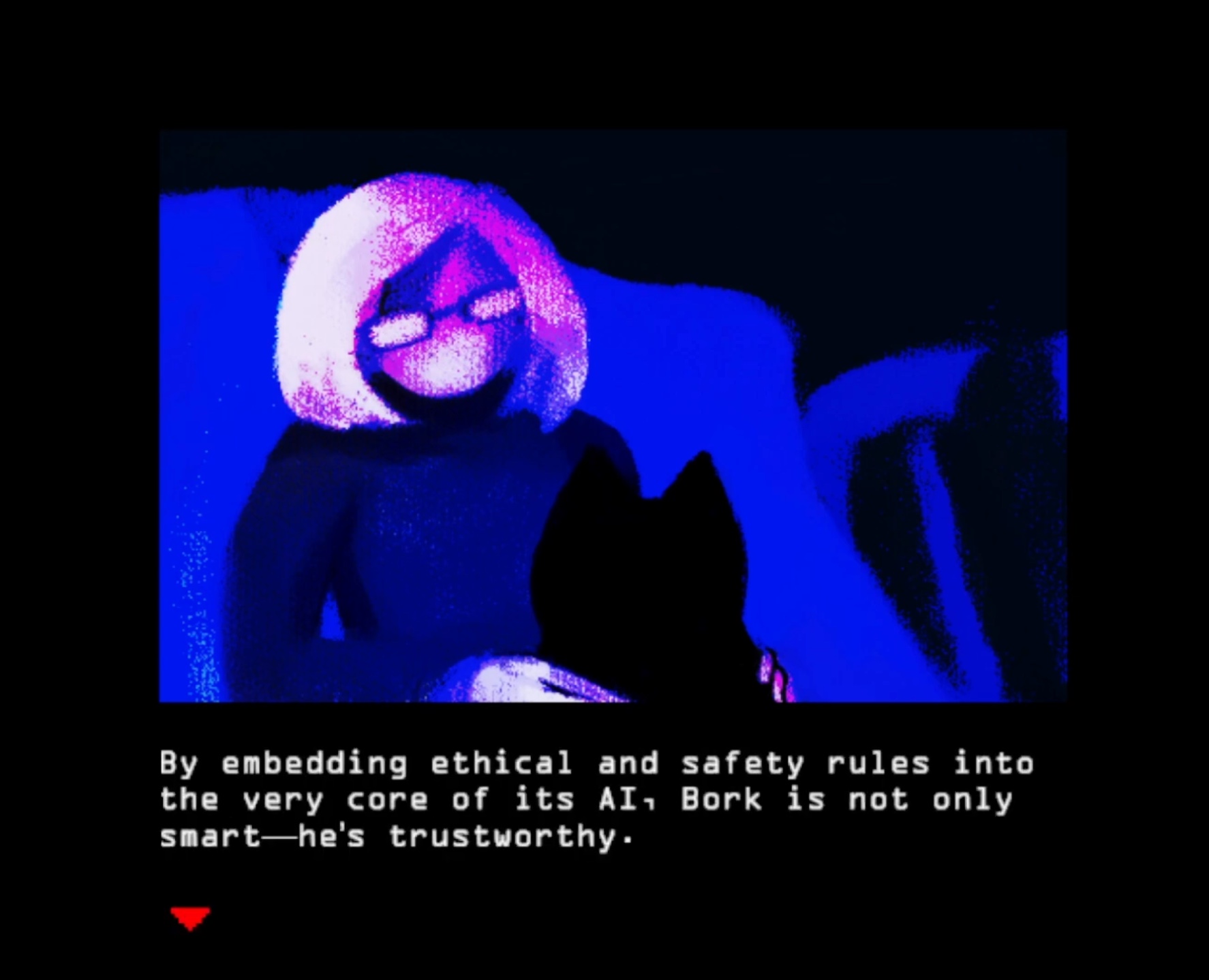
[FIG.8 WE LOVE CUTE DOGS THAT DO EVERYTHING FOR US!!]
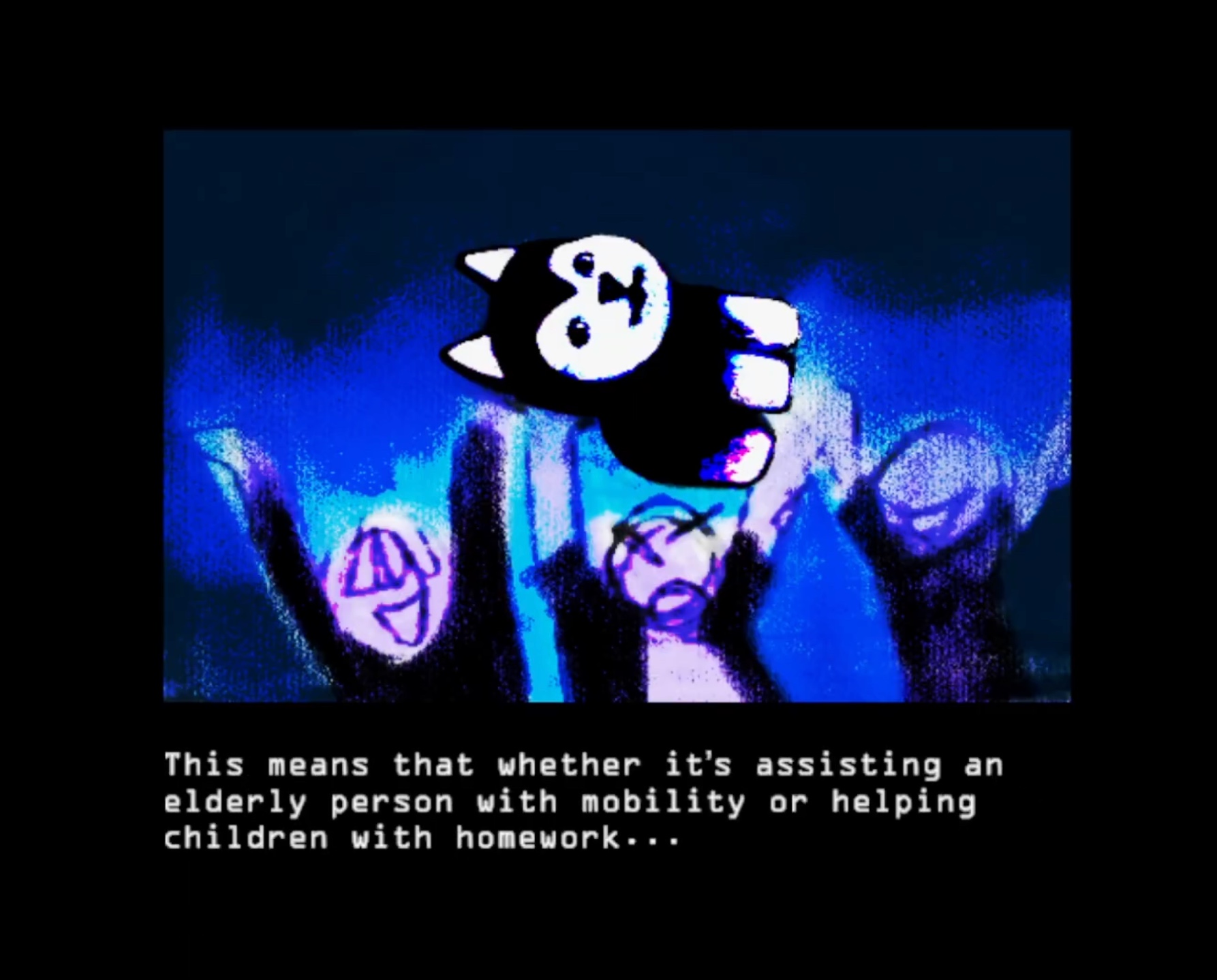
[FIG.9 OH WOW THEY ARE A HERO]
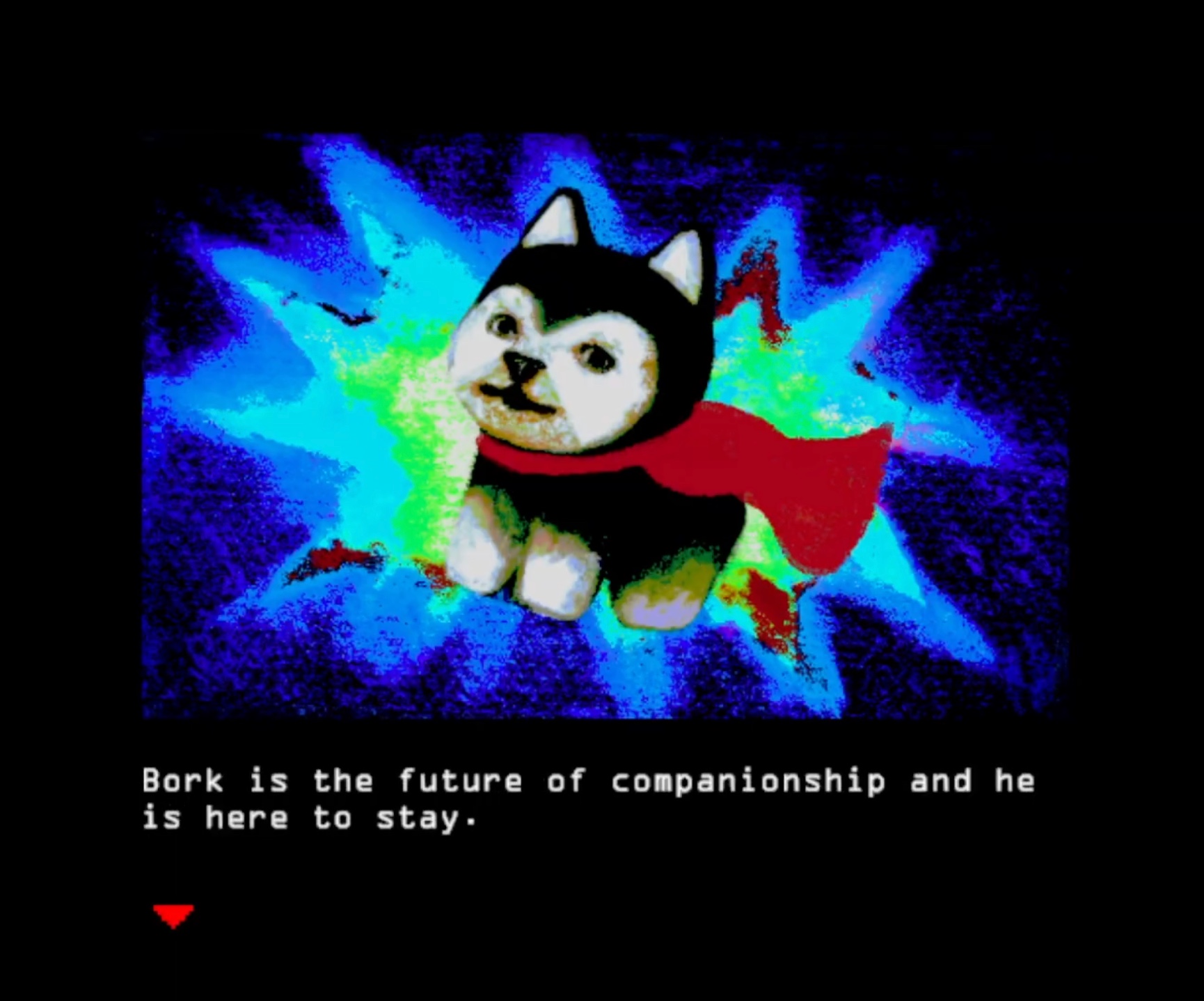
Literature Review
[See: in-depth Literature Review and Primary Proposal]
The early ethos of my research focused on the meaning boundary
between human to AI thinking and identification. Conducting
artifact-led research, I set my sights on CAPTCHA; a tool of
irony; an algorithm that very much focused on identifying
humans, while using user human input to advance AI.
Recurring patterns emerging from my literature review touch on the following points:
CAPTCHA design collapses human diversity into a singular, idealized user profile. CAPTCHAs embody this by being developed for a narrow demographic: English-speaking, able-bodied, digitally fluent users who are disproportionately white, Western, and young.
CAPTCHA has been deployed for over 20 years with no truly ideal solution. Each iteration eventually gets broken, only to be replaced by a harder one; the cycle continues, creating an “arms-race” between human-computer ability
The arms-race goes something like this - [1] A human is forced to prove they are human to a CAPTCHA to browse a site [2] The CAPTCHA trains AI by harvesting everyone’s data [3] AI is trained to become more capable than humans at bypassing CAPTCHA [4] Newer, inaccesssible CAPTCHAs are deployed to the market; the same humans are expected to put adapt to and bypass each one.
The arms race has gotten so out of hand that OpenAI's models can now solve a CAPTCHA more reliably than most humans.
A central question driving my research is whether this trade-off offers any real benefit to those outside the W.E.I.R.D framework: Western, Educated, Industrialized, Rich, and Democratic.
Are people truly better off being protected by algorithms that surveil and classify them, or does that protection come at too high a cost?"
As my research suggests, CAPTCHA, like many AI-facilitated systems, compels users to prove their humanity, while penalizing those unable to keep pace with an ever-escalating arms race.
This line of inquiry eventually expanded into facial recognition and biometric systems, which extend the same logic into the body. Rather than solving a puzzle, individuals are asked to surrender deeply personal biological markers in exchange for mobility and access. Whether through CAPTCHA or biometrics, failing these checks can mean being locked out of online services, denied entry at borders, or barred from institutions entirely.
[FIG.10 PLAY THIS GAME TO PROVE YOU ARE HUMAN!!]
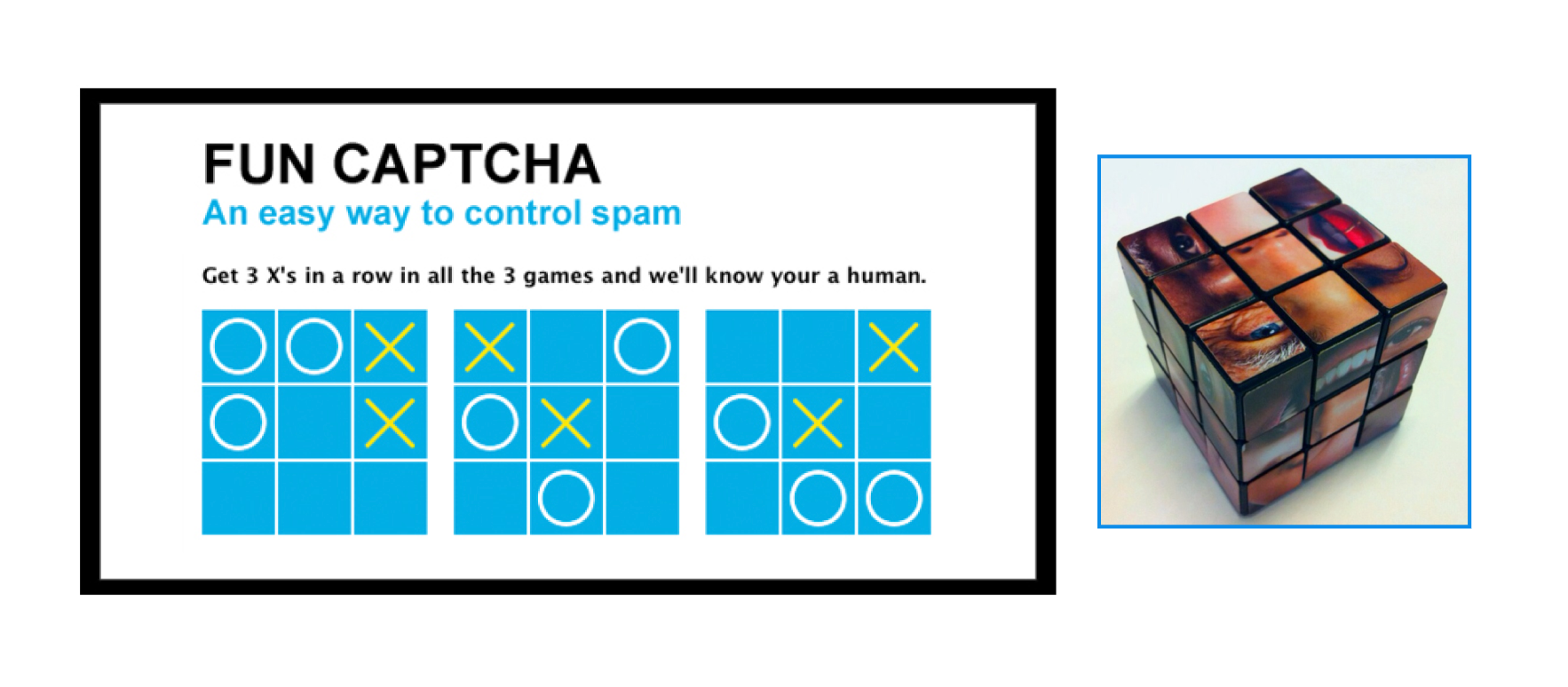
The Dark Side of Gamification
Rather than proposing "improved solutions," I had always aimed to create a design intervention that exposes what technological solutionism conceals: whose humanity is valued and how readily humans adapt to being dehumanized by “neutral” algorithms.
Gamified captchas present interesting dynamics concerning the "winners" and "losers" of an ability-oriented system:
Designers use gamification to make processes enjoyable, yet it can introduce dark patterns when applied to user authentication.
“Procedural Rhetoric” evokes ideas of "toxic meritocracy" in users, outlining the disconnect between game logic and real-life logic
e.g. Games teach players that they are bound to earn rewards and status by “winning,” especially in a competitive setting against other players who “failed.” In other words, if game logic were to be applied outside of games, i.e. cybersecurity/authentication, it legitimizes privilege and dehumanizes by rewarding “winners” and “losers” based on ability.
Early research naturally led me toward game design as the right medium for this topic. My capstone project took shape as a digital game exposing verification systems (i.e., CAPTCHA, biometric identification) as more than security measures, but as instruments of data extraction. By making the anxieties behind seeing and interacting with technologies such as CAPTCHA more apparent, the game critiques the rapid acceleration of AI and the dynamics that quietly sort people into winners and losers at everyday digital checkpoints.
[FIG.11 DID YOU KNOW?? HUMAN DATA FROM CAPTCHAS TEACH SMART CARS HOW TO DRIVE!!]
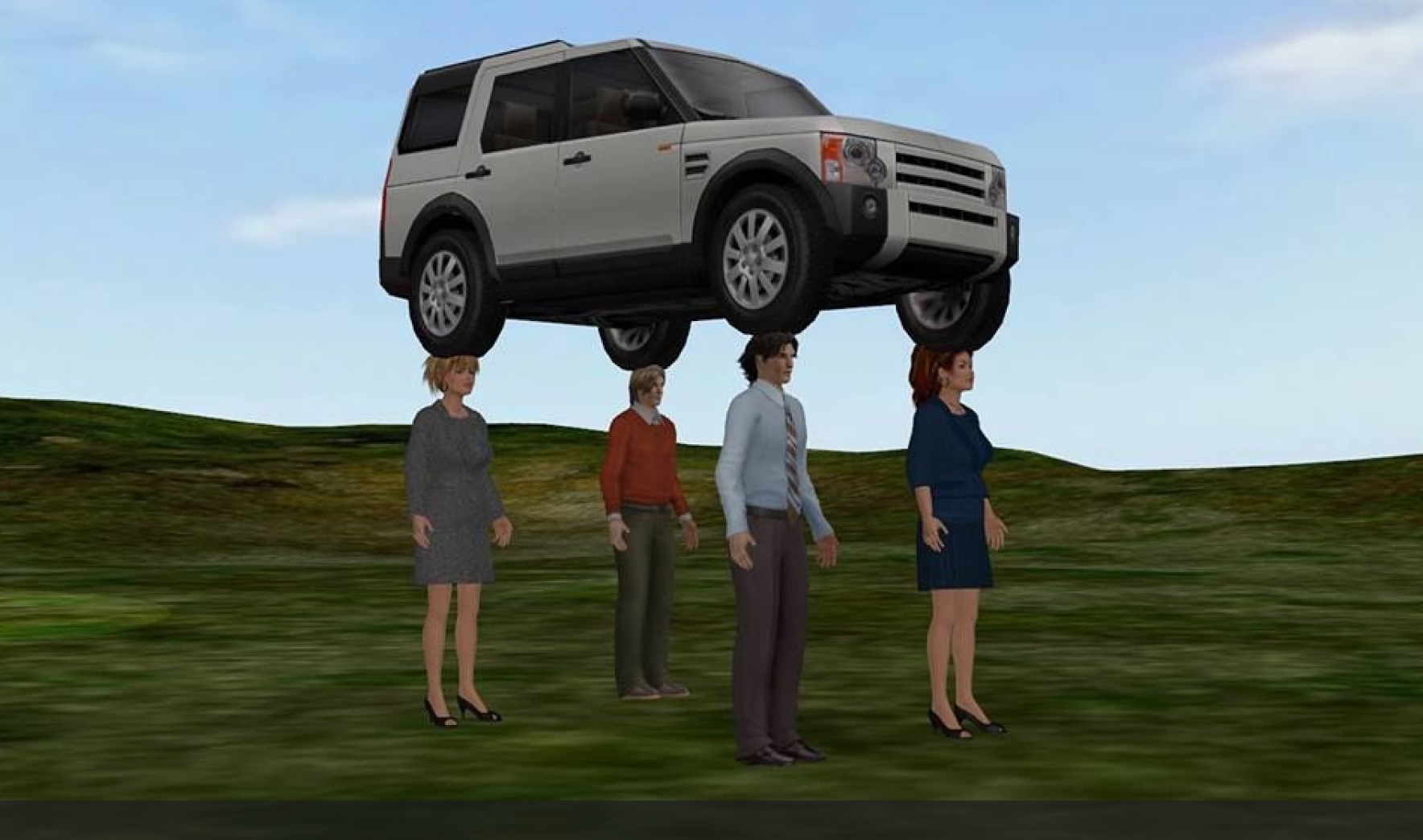
The Output
CAPTURING THE DIGITAL ACCELERATION PARADOX
The Digital Acceleration Paradox describes a situation where the rapid advancement and widespread adoption of digital technologies, like AI and automation, do not necessarily translate into better outcomes for everyone.
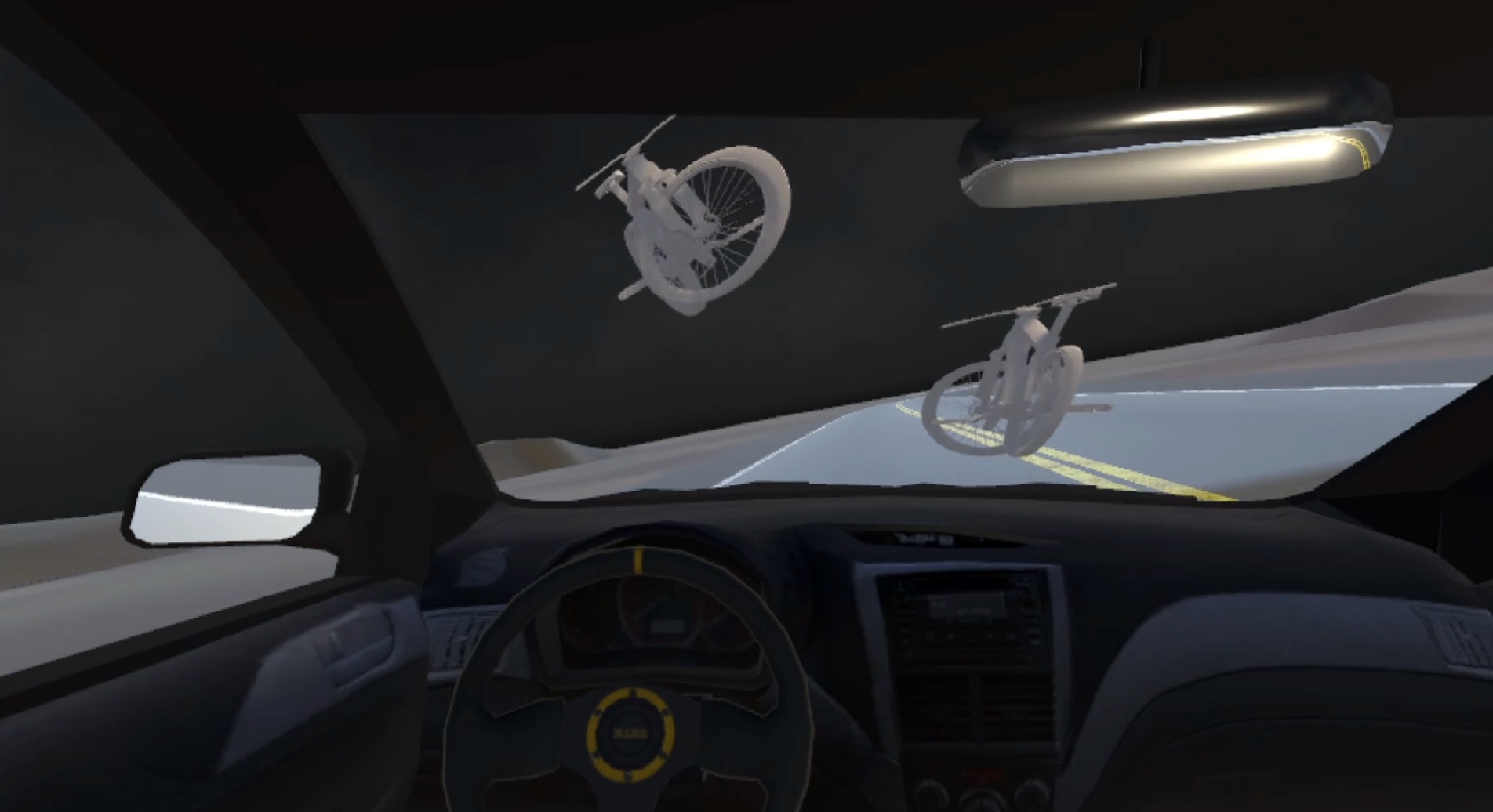
My game utilizes many metaphors, including placing the player in a car. Cars and driving can be just as frightening as they are freeing. Being on the road serves as a metaphor for navigating the digital landscape. This game then poses a critical question: Do humans truly have the freedom to move from point A to point B within the digital space, or are there hidden constraints? What barriers prevent technology from delivering on its utopian promises? The user is intended to ponder, “Who is the Accelerator?” Moreover, every AI-related “tool” on the road acts as friction for the player, introducing them to the issues of access and discrimination present in my initial research. In this game, you, the player, also get to drive a barely functional car, instead of a shiny smart car :)
In this game, every AI related “tool” act as friction for the player, introducing them to the issues of access and discrimination from my initial research. You also get to drive an awful car :)
The Game Premise/"Lore"
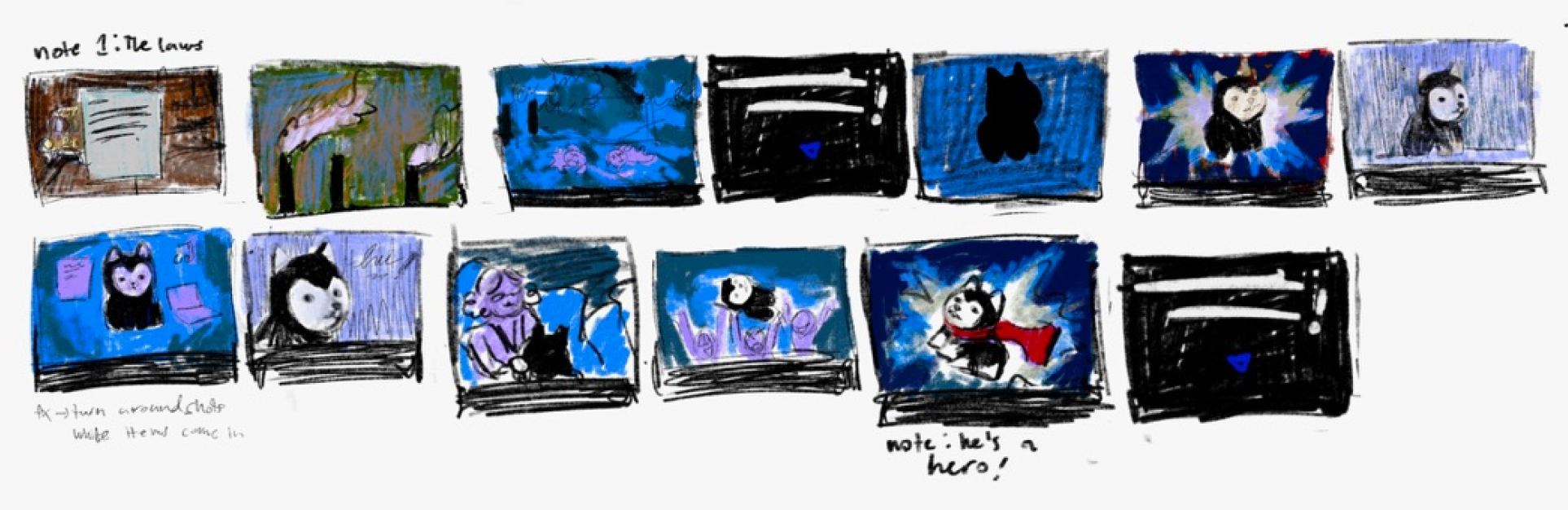
"It’s 2040 and the air has become so polluted that it killed living pets, leaving humans lonelier than ever. The cute AI companion and dog, BORK, developed by Tedbot, is a low-maintenance, ever-helpful companion who never ages, never leaves, and lives eternally. Does the concept of forever sound daunting? Not to worry as BORK is designed for humans in mind; they were designed around Isaac Asimov's "Three Laws of Robotics!" But why are there these damned CAPTCHAs around the road? BORK is watching you and BORK doesn’t think you belong here. You must escape. Fortunately, you are not entirely alone. Someone has been here before you, and they left something behind. Find their messages. Find the map. Never trust bright lights."
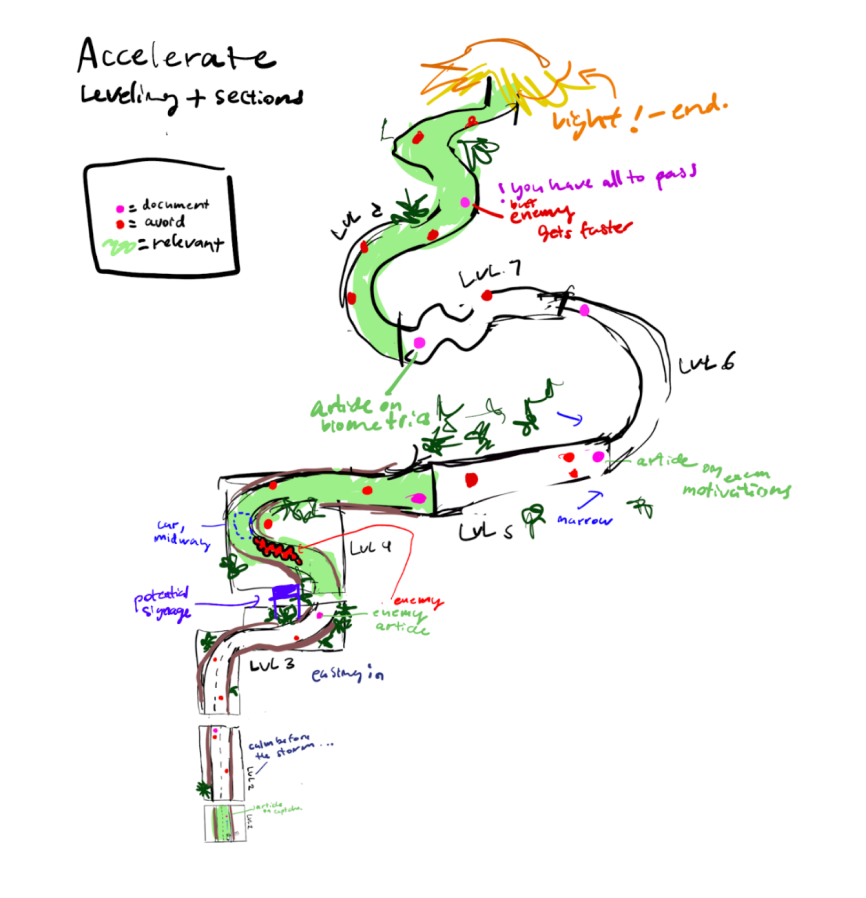
[FIG.12 LEVEL DESIGN//MAP]
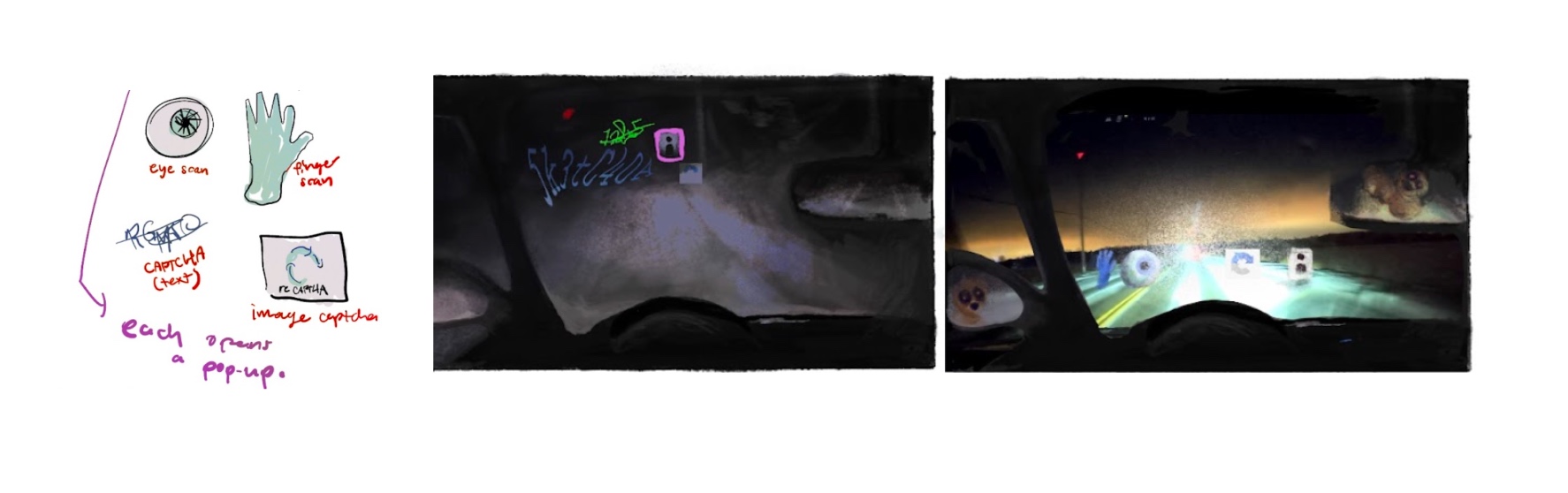
[FIG.13 OLD CAPTCHA/ENEMY DESIGNS]
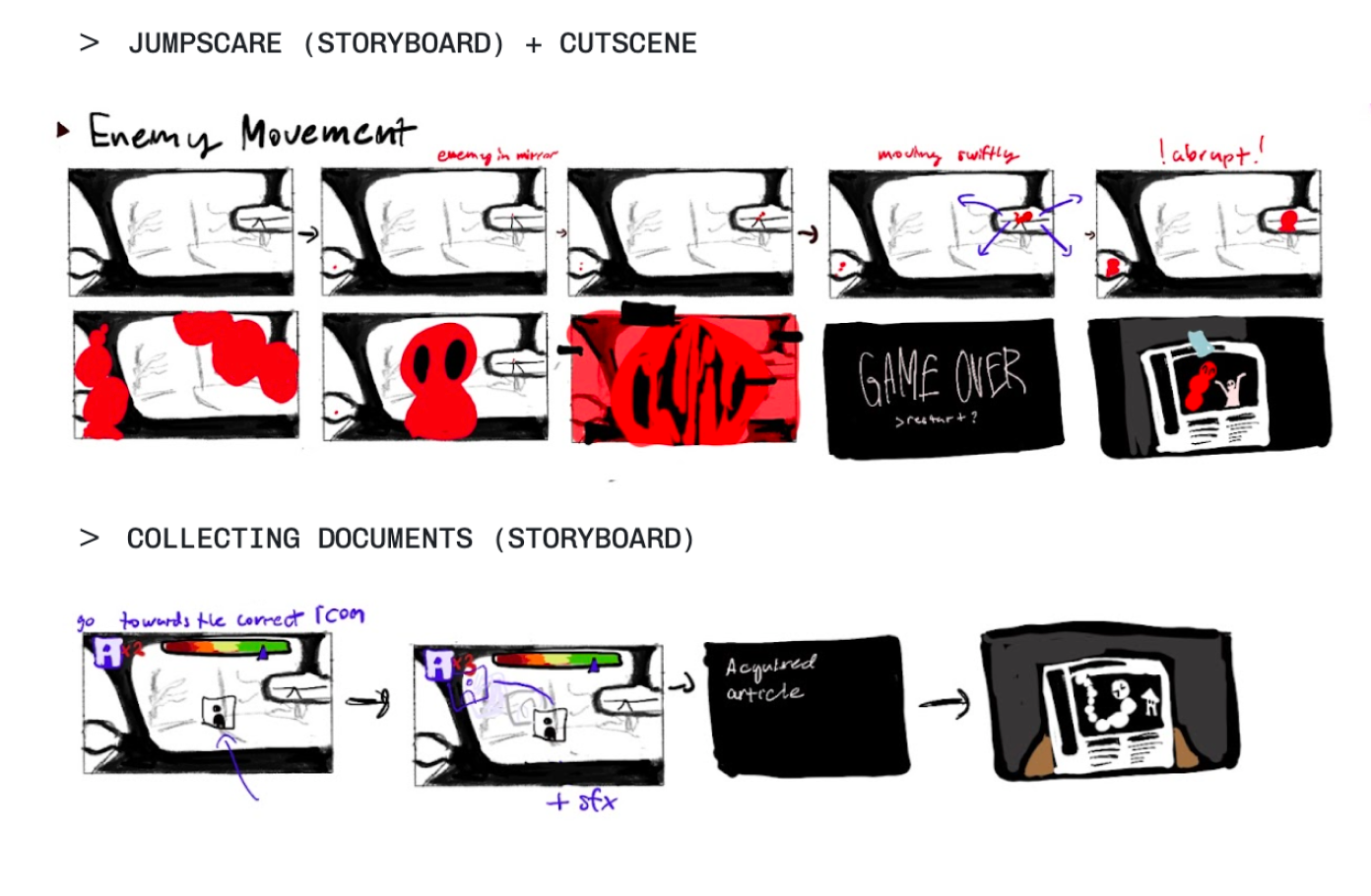
[FIG.14 OLD UI/GAMEOVER]
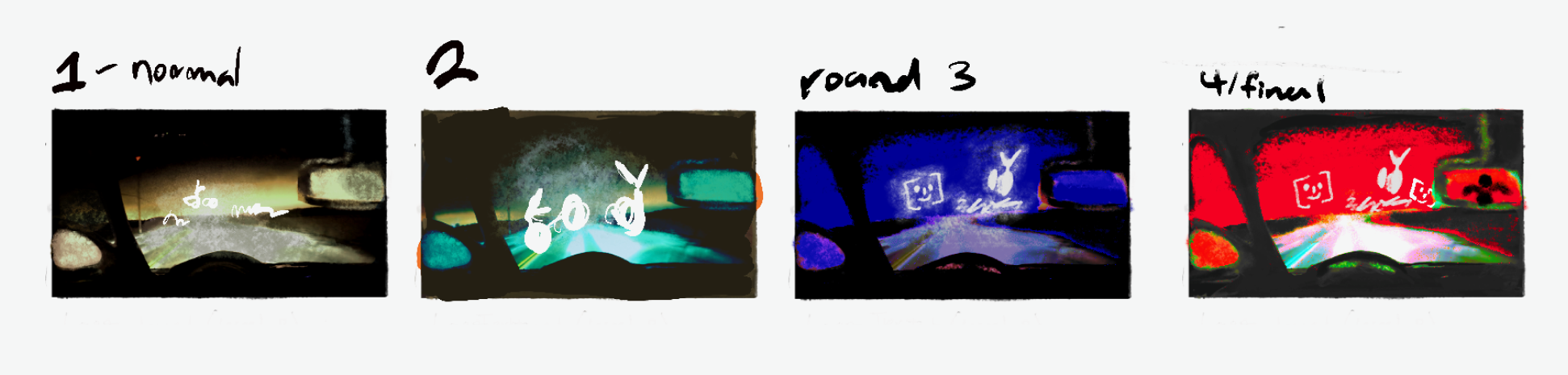
[FIG.15 LEVEL DESIGN WITH COLOUR SYSTEM]
Game Design
A core principle of game design is easing the player into the environment gradually, letting them find their footing before puzzles and challenges surface. A game should never overwhelm a player with all the rules. Drawing from titles such as Exit 8, The Hop Hop, Five Nights at Freddy's, Slender: The Eight Pages, Newspaper Day, and Baldi's Basics, I studied how level structure and gameplay mechanics can guide a player through a world without ever making them feel lectured to.
[FIG.16 ENEMY DRAFTS]
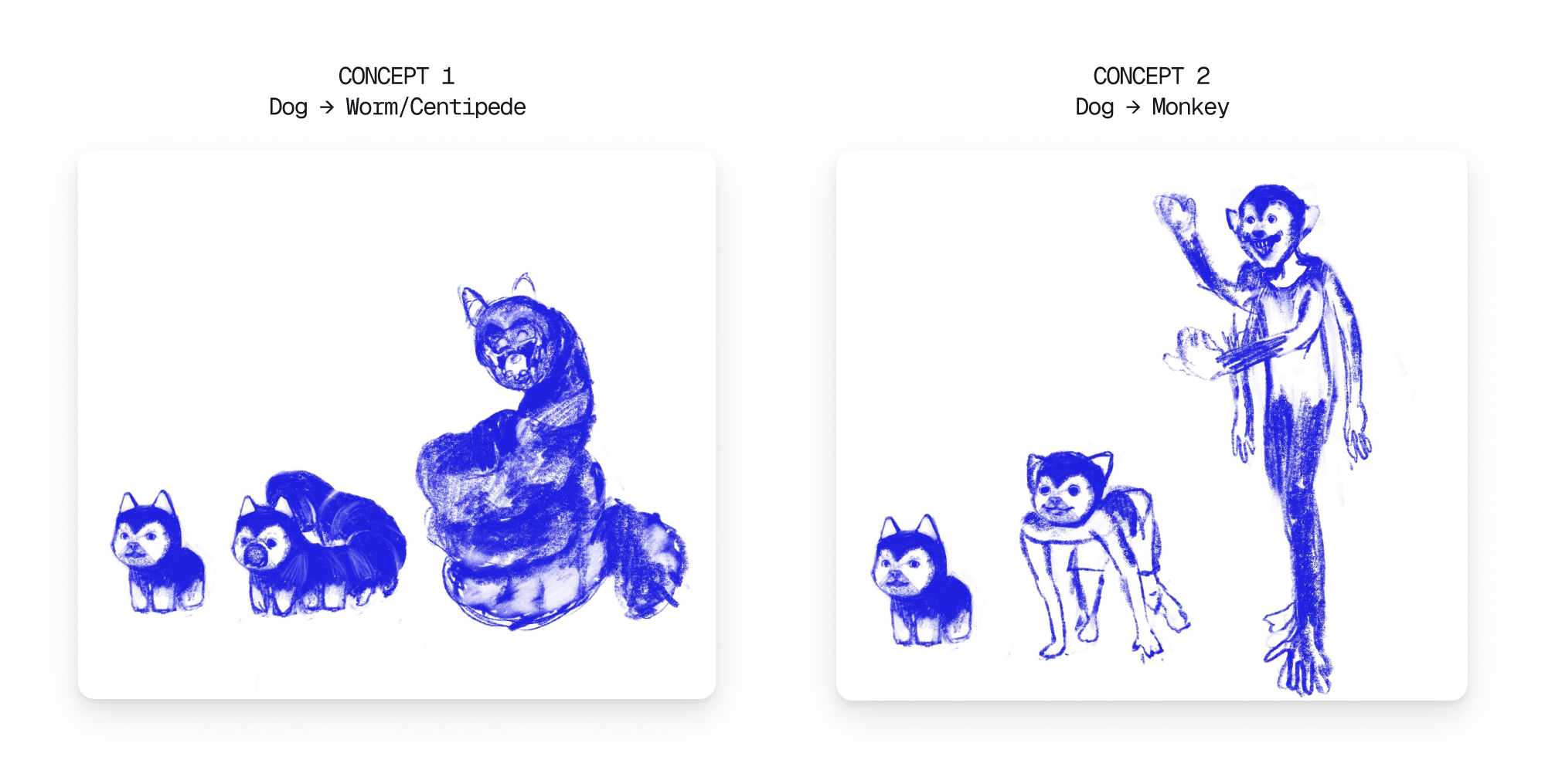
The Enemy Design
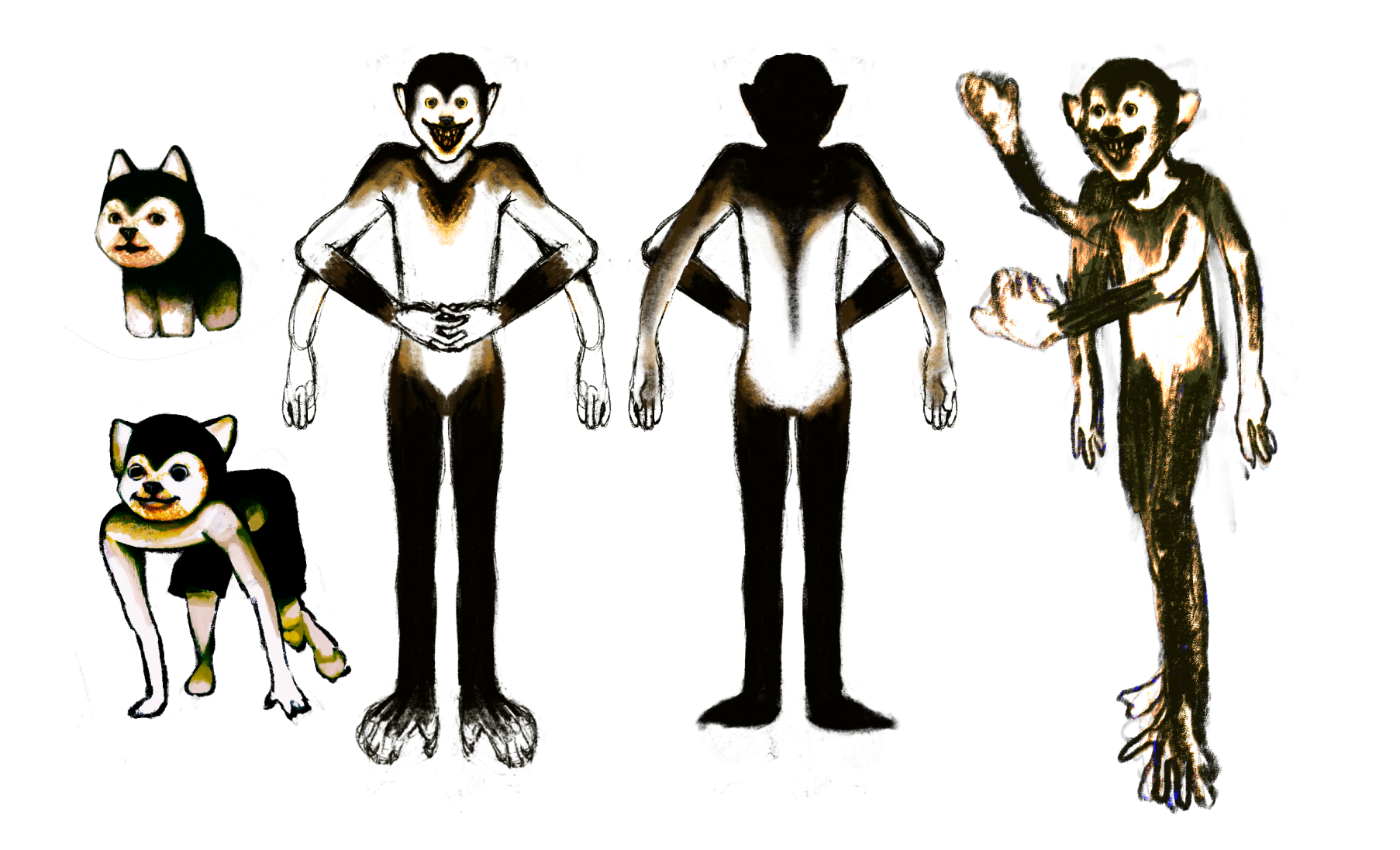
The enemy design had always had 3 forms as the AI companion merged into one, final form/boss. The original design for the final boss was meant to be a huge worm, resembling a parasite that feeds from humans, or a call back computer worm attacks, as though the consequences of AI could be a “mistake” manufactured by humans. I eventually scrapped this design as I realized it would have been too difficult to rig and animate. Moreover, it wasn't scary or memorable enough on its own; the true unease was always meant to come from how it moved (and I am not an animator).
I eventually settled on the design of a monkey, which I believed was most fitting. While monkeys are arguably "cute" and "marketable" enough to be mascots i.e. companion-material, the combination of their high intelligence and the fact that they look so humanlike is deeply unsettling. Because they are so closely associated with human evolution, seeing that level of brainpower in a creature that mirrors our own form feels like looking at a distorted, unpredictable version of ourselves. The monkey I designed has more arms than a regular monkey, the same way AI slop might.
[FIG.17 FINAL BOSS TWEEKING AROUND]
[FIG.18 THE BOSS/BORK WALK]
[FIG.19 CRAWLING LIKE THAT GIRL FROM THE RING]
[FIG.20 BORK METAMORPHOSIS IN COLOUR]
[FIG.21 LVL 1 CUTSCENE DRAFTS - IN-GAME]
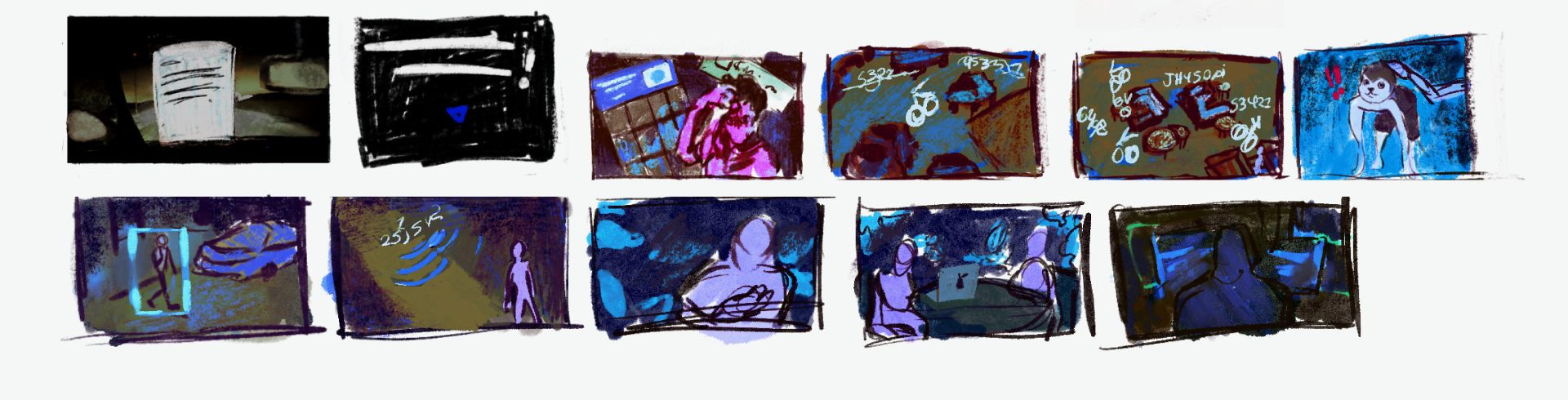
[FIG.22 LVL 2 CUTSCENE DRAFTS]
Design Language
COLOUR AND LIGHTING
Many horror games are red or green, which I borrowed some inspiration from. However, I tended to swap around the standard colour psychology in the final output. For example, blue and purple symbolize dread, technological acceleration, corporate negligence, death, and pollution in my game; I especially highlight these themes through my storyboards. Meanwhile, my use of red symbolizes hope, life, or truth. The obstacles in my game apply a Bloom /glow effect to teach the user not to trust the fleshiness and dark UX patterns of advancing technologies.
3D MODELLING
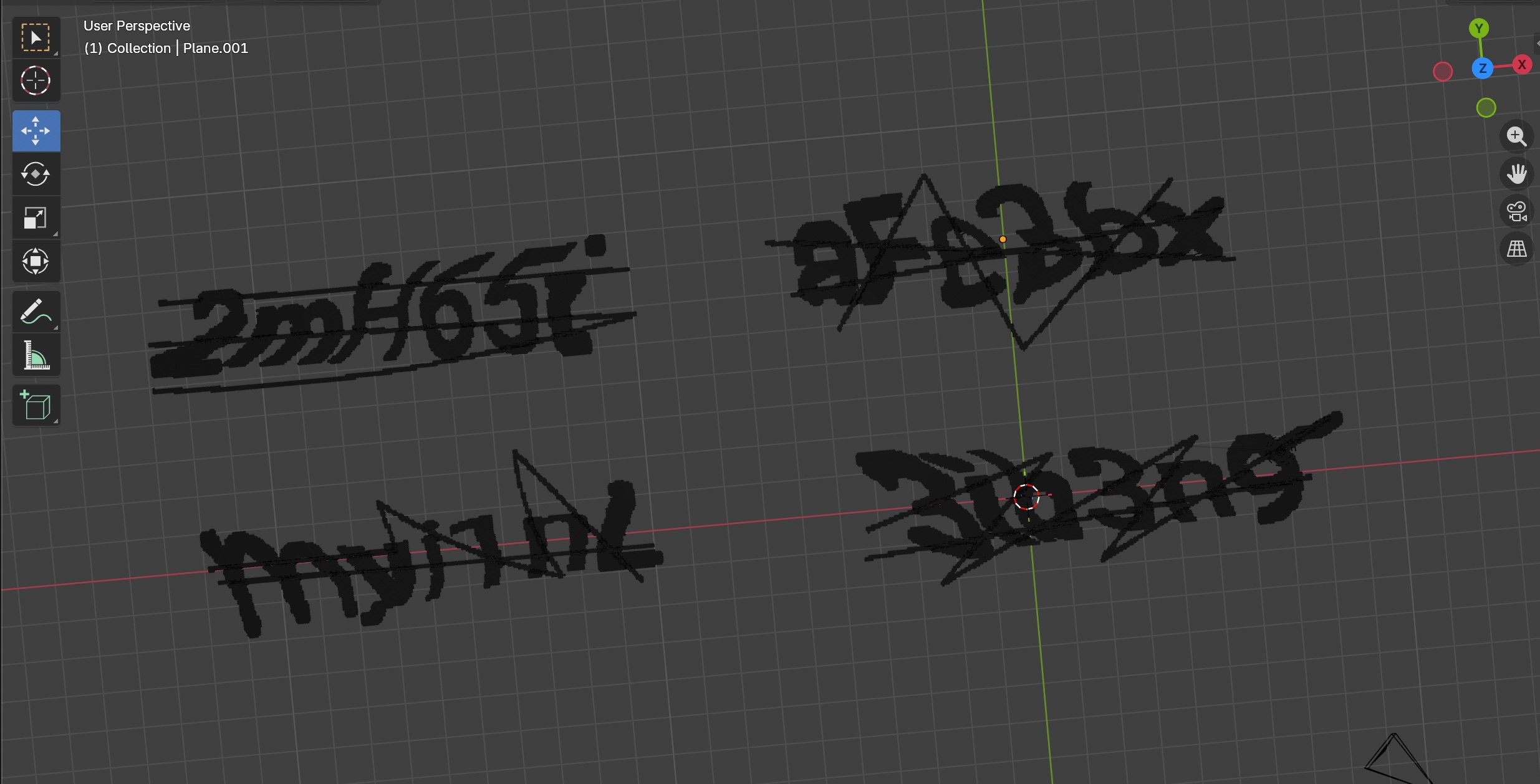
I wanted the final output to use 3D models. I chose a 3D format specifically because years ago, 3D experiences were seen as revolutionary and groundbreaking, mirroring the themes of digital acceleration in my project. Moreover, a number of new games have been reverting to the 3D low-poly format to embrace the imperfections of small-scale human labour and its accessibility for indie developers. The message highlights the illusion of choice that the online space gives you. I 3D modelled the Captchas on Blender; meanwhile, Sam Lampano crafted the enemy 3D model and rig, which uses skins I am currently drawing on Procreate.
DIGITAL ILLUSTRATION
To honour my roots in illustration and the RPG horror games I admired playing, I drew the cutscenes in Procreate.
SOUND DESIGN
Sound Design became a way to make full use of the digital medium I was working with. I added sound to the text and built tension through the absence of sound on the road, with no entities in the environment aside from the player and enemy. Audio carried the weight of atmosphere and unease during the cutscenes.
[FIG.23 MAKING CAPTCHAS ON BLENDER]
[FIG.24 EARLY PROTOTYPING IN UNITY]
Key Learning & Next Steps
Through this project, I taught myself C# and Unity from scratch, and picked up the basics of Blender along the way. I leveraged what I call “The power of YouTube” to pick up on these new skills. Additionally, I discovered a genuine love for writing, and found that pairing an absurd backstory with my research created a surprisingly rich foundation for the game’s storytelling. Perhaps most importantly, I learned the power of just figuring things out and how rewarding that process can be.
A demo of this game will be made available on Itch.io by April 25th. Beyond being my capstone project, this game is an ongoing passion project that is currently in development.
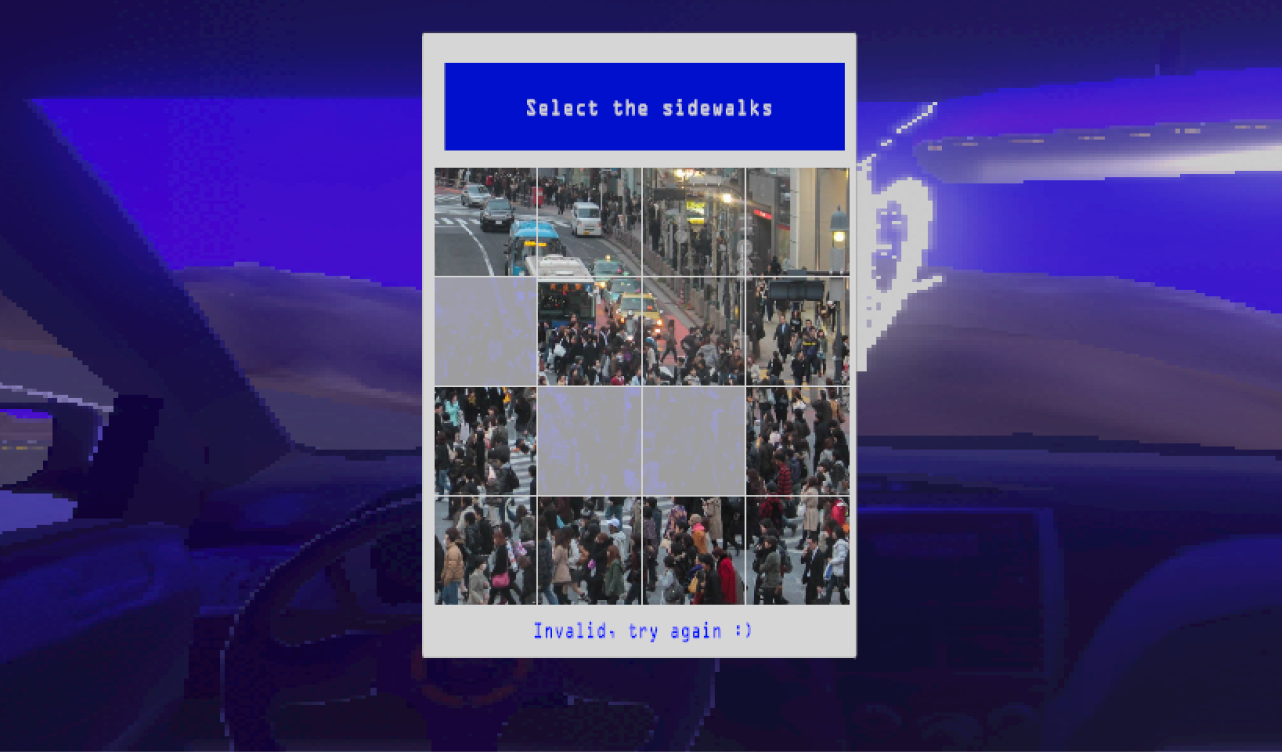
[FIG.17 CAPTCHAS AND TECH JUST GET MORE ADVANCED AND INACCESSIBLE, BUT YOU STILL HAVE TO PROVE YOU ARE HUMAN!!]